
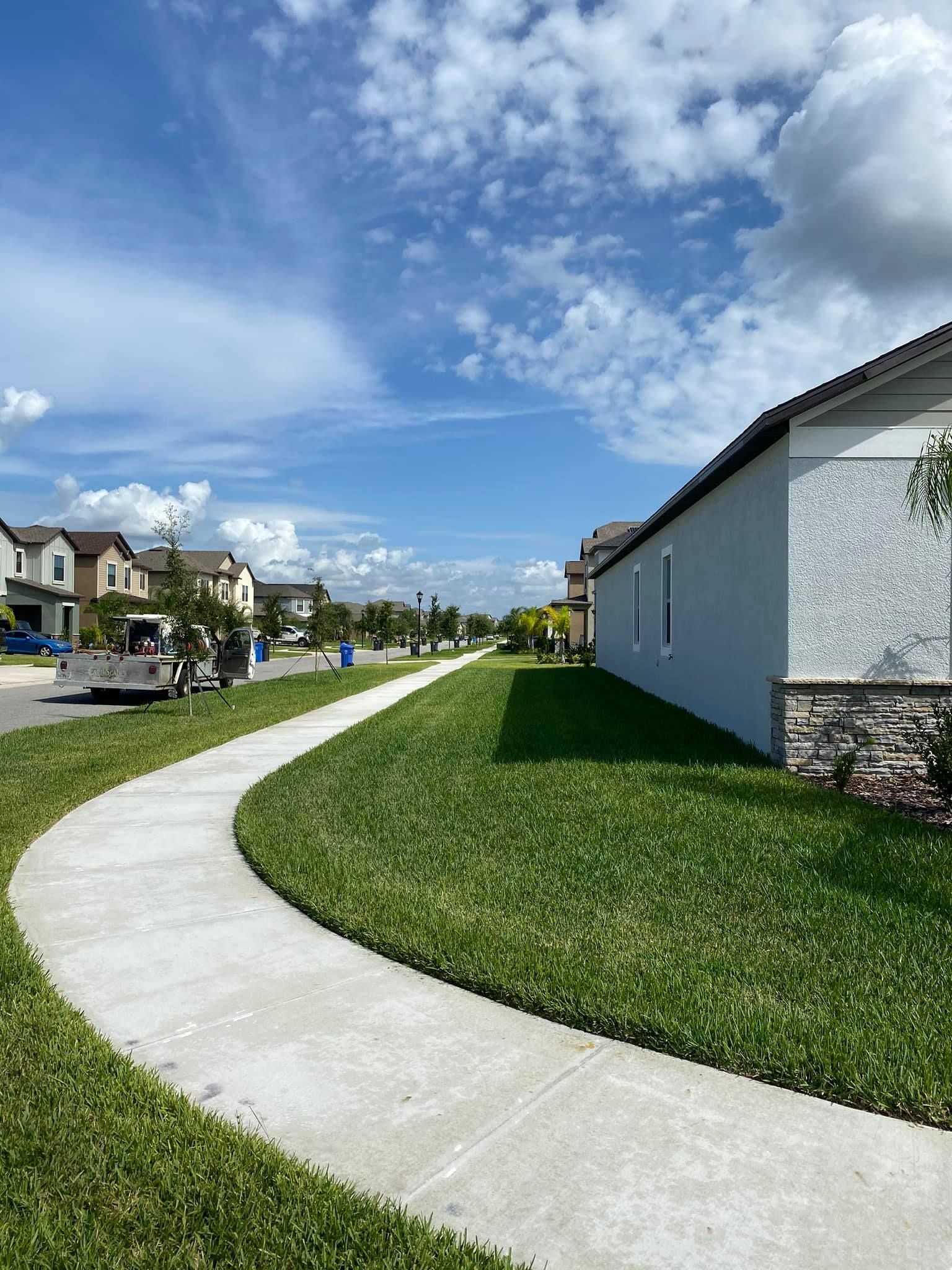
Turf That Fills In and Stays Full
Lawn Care in Plant City for addressing patchy growth, weed pressure, and nutrient deficiencies in Florida grass
Florida's sandy soils leach nutrients faster than clay-based soils found in other regions, which means lawns show yellowing and thinning even when they receive regular watering. Fertilization schedules designed for St. Augustine, Bahia, or Zoysia grass must account for rapid nutrient loss from frequent summer rainfall and the year-round growing season that depletes soil reserves continuously. Prestige Worldwide Turf delivers lawn care in Plant City, Wesley Chapel, Windermere, and surrounding areas focused on restoring turf density through targeted fertilization, controlling the broadleaf and grassy weeds that compete for space and nutrients, and maintaining soil conditions that support healthy root development. Over time, you'll notice grass blades thicken, bare spots fill in with new growth, and weed presence declines as turf becomes dense enough to suppress weed seed germination naturally.
Treatments include granular fertilizer applications timed to grass growth cycles, pre-emergent herbicides that create a barrier against weed seeds, and post-emergent weed control that targets existing growth without damaging turf. Each application considers current weather patterns, soil moisture levels, and the specific nutrient needs of your grass type.
Schedule lawn care service to assess current turf health and establish a treatment calendar based on your yard's conditions.
Why Regular Treatment Produces Visible Turf Improvement
Nitrogen applications promote blade growth and the deep green color associated with healthy turf, while phosphorus supports root expansion that improves drought tolerance and nutrient uptake. Potassium strengthens cell walls, making grass more resistant to disease, heat stress, and foot traffic damage that causes soil compaction and thinning over time.
After several months of consistent care, lawns develop thicker grass coverage that crowds out weed seedlings, improved color uniformity across the entire yard, and better recovery from environmental stress like dry spells or heavy rain events. Weed control reduces competition for water and nutrients, allowing grass to use those resources for growth rather than sharing them with invasive plants.
Treatment schedules adjust based on seasonal growth patterns—more frequent fertilization during peak growing months and reduced applications during cooler periods when grass growth slows. The approach also accounts for irrigation practices, shade coverage, and soil type variations within your property that affect how quickly nutrients are absorbed or washed away.
Common Questions About Lawn Care Programs
Maintaining healthy turf in Plant City and neighboring communities requires understanding how Florida's climate, soil conditions, and grass types interact with fertilization and weed control strategies.
What causes lawns to thin out even with regular watering?
Sandy soils drain quickly and hold fewer nutrients than other soil types, frequent rain leaches nitrogen and potassium before grass roots can absorb them, and high temperatures increase nutrient demand while accelerating organic matter breakdown, all of which create deficiencies that slow growth and reduce turf density.
How does fertilization timing affect results?
Applying nitrogen during peak growth months promotes rapid blade development and lateral spreading, while late-season applications support root growth that improves winter hardiness, and timing treatments around rainfall events ensures nutrients dissolve and reach root zones rather than washing away before absorption occurs.
When do pre-emergent herbicides need to be applied?
Pre-emergent treatments work best when applied before soil temperatures trigger weed seed germination, typically in early spring for summer weeds and early fall for winter weeds, with effectiveness lasting eight to twelve weeks depending on rainfall and soil conditions.
Why does St. Augustine grass need different care than Bahia or Zoysia?
St. Augustine requires higher nitrogen rates to maintain color and density, is more susceptible to chinch bug damage that needs proactive monitoring, and tolerates less foot traffic than Bahia, while Zoysia grows slower but develops denser turf that resists weeds more effectively once established.
How long does it take to see improvement in patchy lawns?
Fertilization produces visible color change within one to two weeks as chlorophyll production increases, but turf density improves over several months as grass spreads laterally to fill bare spots, and weed reduction becomes noticeable after multiple treatment cycles deplete the seed bank in the soil.
Prestige Worldwide Turf customizes treatment plans based on your grass type, current turf condition, and specific problem areas that need focused attention. Arrange a property visit to review lawn health and develop a fertilization and weed control schedule tailored to your yard.